.png)
Built for Industries Where Force, Weight, and Durability Matter
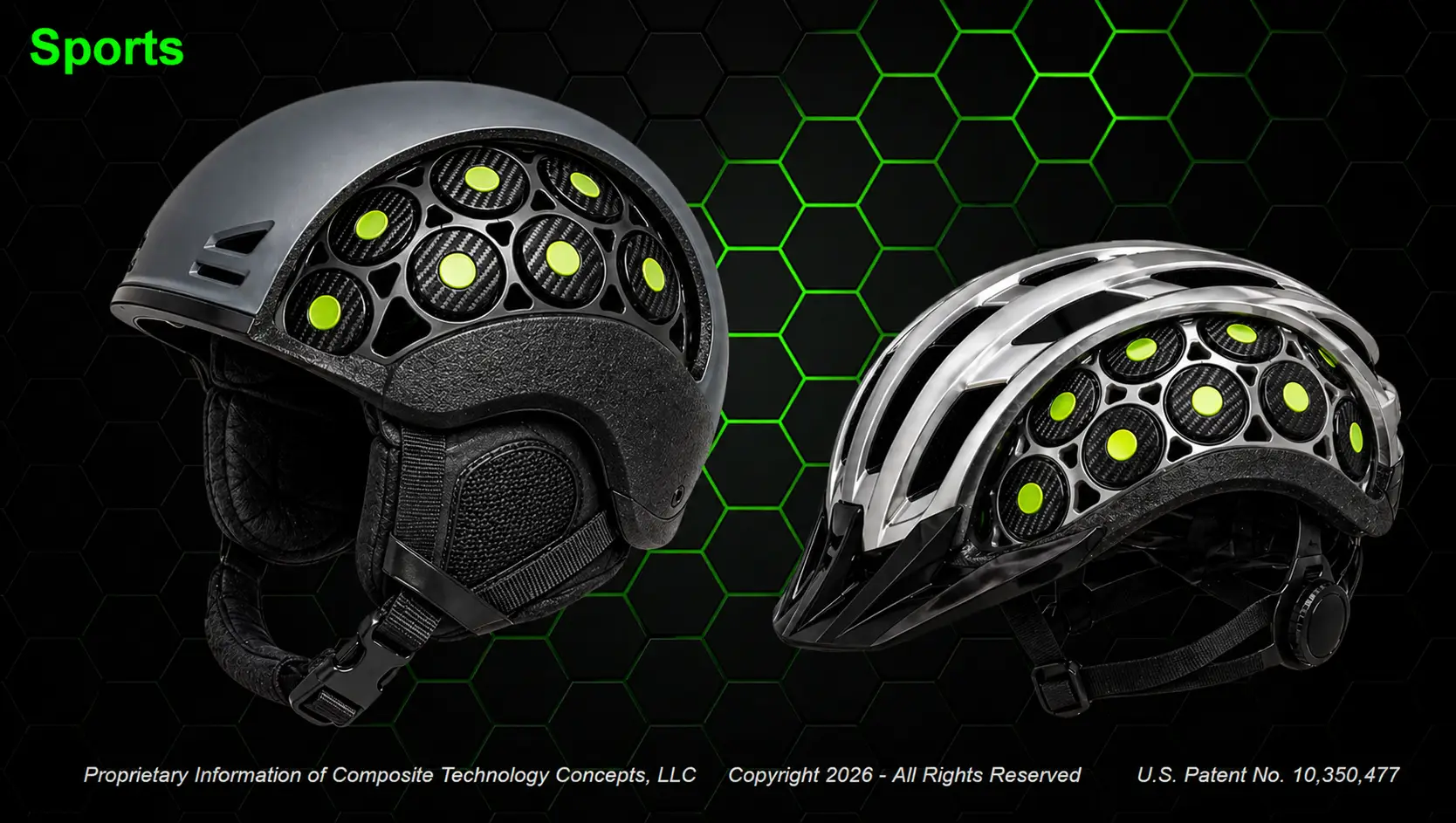
StrainVector Control™ from Composite Technology Concepts addresses one of engineering’s most persistent challenges: controlling how force moves through a structure.
By managing impact, shock, vibration, and deformation more intelligently, StrainVector Control™ technology can help manufacturers create lighter, safer, and more durable systems across demanding commercial, industrial, defense, and performance-driven applications.
Explore Applications


.png)
A Structural Approach to Force Management
Many impact and vibration solutions are added around a product after the core design is already defined — dampers, isolators, pads, or protective layers used to manage force after it has entered the system.
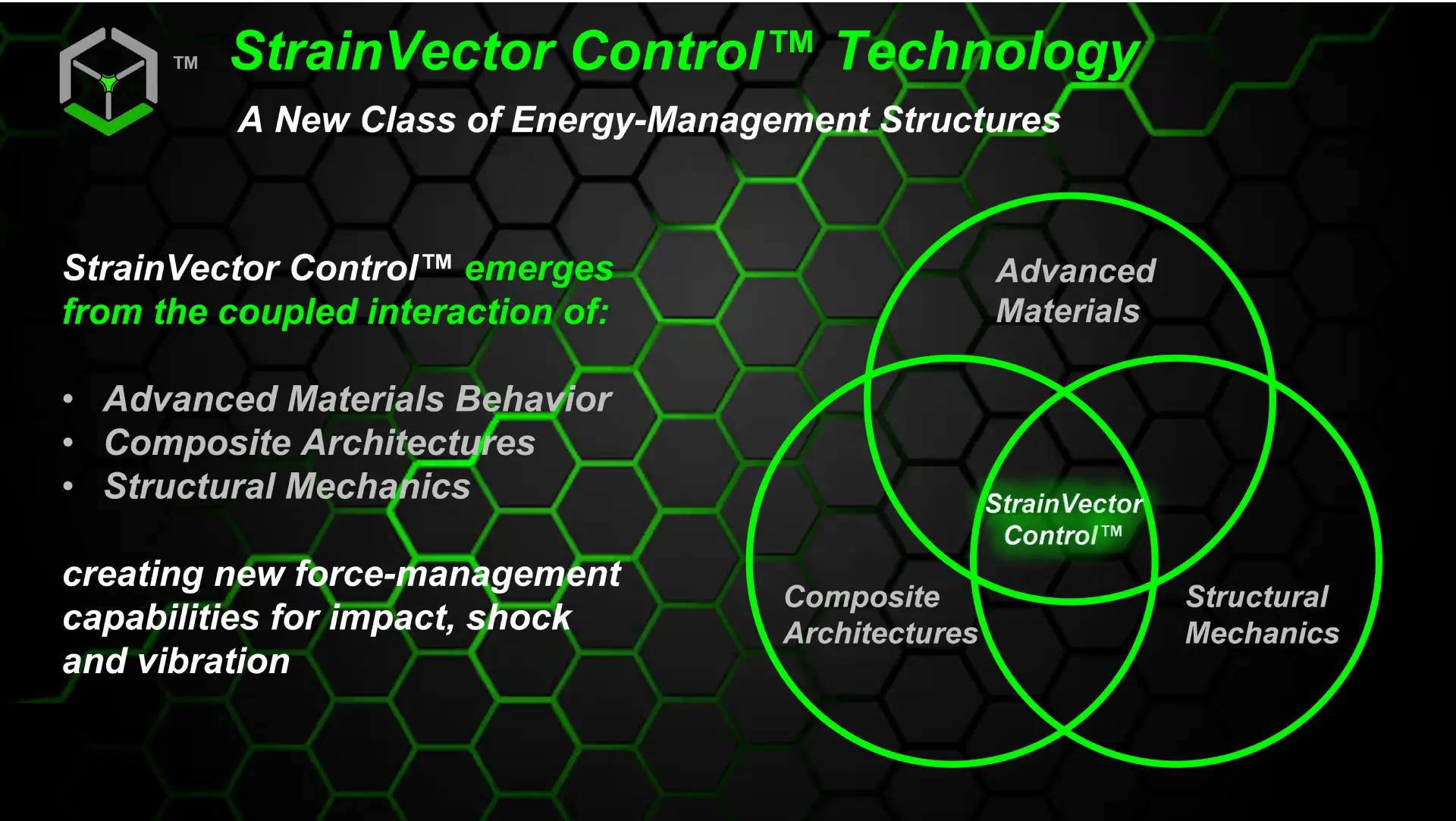
CTC takes a different approach. StrainVector Control™ technology manages force at the structural level, using controlled deformation to absorb energy, reduce peak loads, and isolate vibration within compact, lightweight configurations.
Because StrainVector Control™ technology can be engineered around specific load cases, geometry, materials, and performance requirements, it gives designers a flexible platform for new product development or integration into existing systems. CTC’s proprietary numerical analysis method allows concepts to be evaluated and refined before fabrication begins, helping reduce development risk and cost as well as accelerate design intent to validated performance.
See What's Possible
CTC works directly with OEMs, part manufacturers, and development partners to evaluate how StrainVector Control™ can enhance product performance.
Leveraging proprietary analysis tools and extensive expertise in nonlinear structural behavior, we help customers identify promising design approaches, evaluate technology integration opportunities, and accelerate product development by reducing reliance on costly iterative design, fabrication, and testing.
Our role is to provide technical insight and design support that enables more efficient development, while customers retain responsibility for their final product designs.