.png)
About Us
CTC was founded to bring a fundamentally new structural technology to the products and industries that need it most.
Built to Solve Problems Conventional Materials Can't
Composite Technology Concepts (CTC) was founded on the belief that many of today’s most persistent shock, vibration, and force-management challenges require a fundamentally different structural approach. Rather than relying solely on material selection, added complexity, or conventional mechanical systems, CTC seeks to unlock new performance capabilities through engineered deformation.
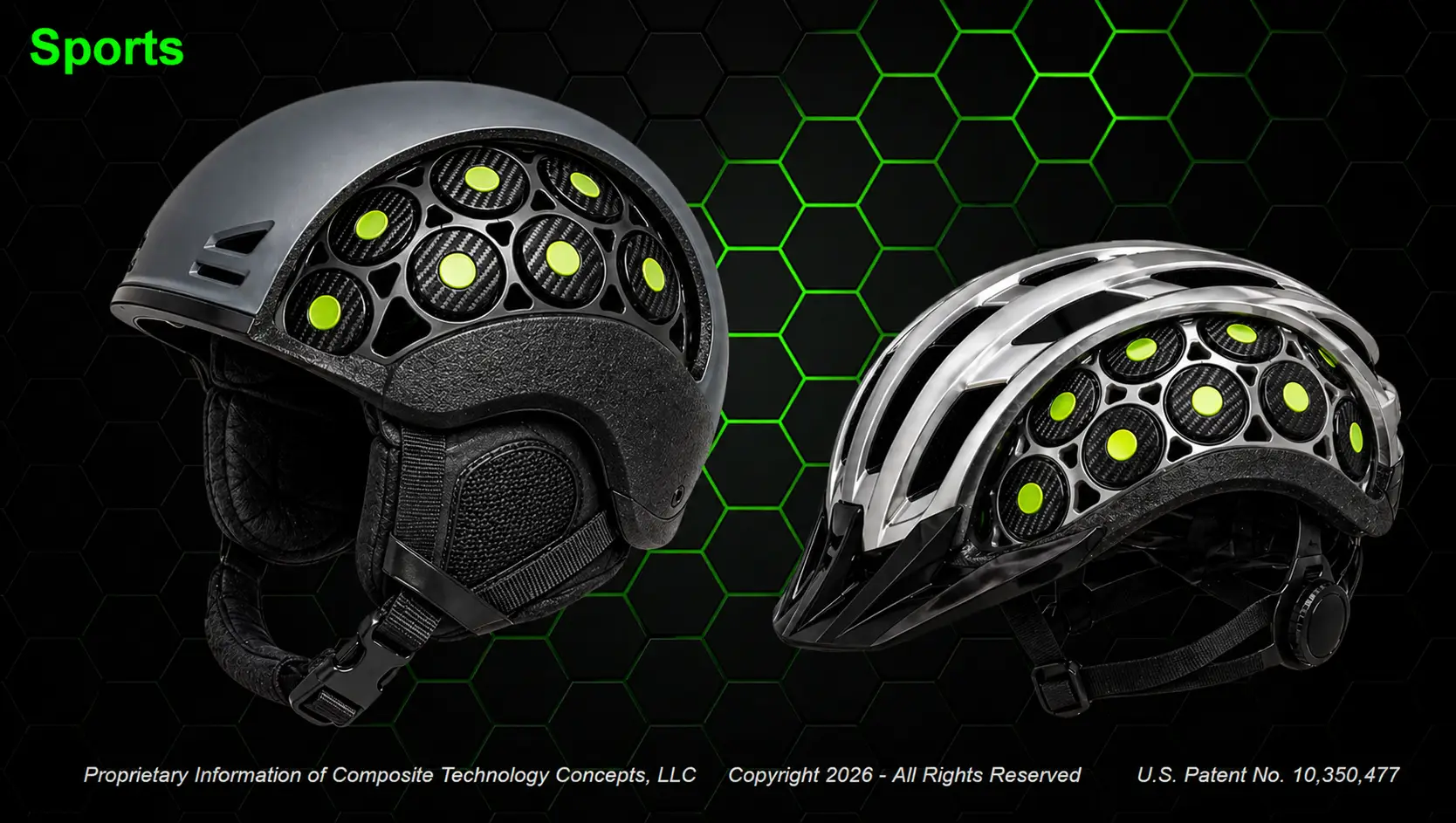
StrainVector Control™ is the result — a patent-pending technology platform developed from decades of experience in aerospace structures, advanced materials, and product innovation. Supported by prototype development and testing, StrainVector Control™ provides designers with a new class of structural tools for managing impact energy, isolating vibration, and controlling force across demanding aerospace, defense, industrial, robotics, medical, transportation, and sporting goods applications.

Terry Schneider, Atoms to Airplanes, Dec 2009-Jan 2010 Boeing Frontiers
Terry Schneider, Founder & CEO
Terry Schneider is the Founder and Chief Executive Officer of Composite Technology Concepts, LLC (CTC), where he leads the development and commercialization of StrainVector Control™ — a technology platform focused on creating a new class of high-deformation structures for energy absorption, force modulation, vibration isolation, and impact mitigation.
With more than 40 years of experience spanning aerospace, advanced materials, research, and executive leadership, Terry has built a career advancing innovative technologies for some of the world’s most demanding engineering applications. His experience includes commercial and military aerospace programs, and NASA’s Space Shuttle Program, where he received a NASA Award for Significant Contribution to the successful STS-2 Space Shuttle mission.
Prior to founding CTC, Terry served as Vice President of Engineering and Chief Technical Officer at Harper Engineering Company, leading product development, technology commercialization, and strategic growth initiatives while managing the company’s intellectual property portfolio. Earlier, he held multiple technical leadership positions with The Boeing Company and was elected to Boeing’s Technical Fellowship as an Associate Technical Fellow, one of the company’s highest technical recognitions for engineers and scientists who have demonstrated exceptional technical leadership and innovation. In this role, he contributed to the development and certification of advanced composite technologies utilized across several Boeing aircraft programs, including the 737, 777, 787 and 747-8 Programs.
Terry also served as a Senior Collaborating Scientist with the University of Washington Department of Chemical Engineering’s Polymeric Composite Laboratory and directed Boeing-sponsored collaborative research programs at the University of Washington and the Massachusetts Institute of Technology (M.I.T.) focused on advanced polymer composite materials and processing technologies.
An inventor on more than 18 U.S. and international patents, Terry has received multiple industry honors including Boeing’s Special Invention Award and Boeing’s Research & Technology’s Breakthrough Award for innovations in advanced composite materials. Today, he applies this experience to advancing StrainVector Control™ and CTC’s mission of developing and commercializing transformative structural technologies for aerospace, defense, robotics, medical, transportation, industrial, and sporting goods applications.
Jonathan H. Gosse, Ph.D., P.E., Chief Engineer
Dr. Jonathan Gosse serves as Chief Engineer for Composite Technology Concepts, LLC (CTC), bringing more than 30 years of aerospace engineering experience spanning advanced structural analysis, materials engineering, computational mechanics, and product development.
Prior to joining CTC, Dr. Gosse spent his career with The Boeing Company, where he was elected a Boeing Technical Fellow in recognition of his technical leadership and significant contributions to aerospace engineering and structural technologies. Throughout his career, he has supported a broad range of aerospace platforms, including fighter aircraft, unmanned air vehicles, commercial transport aircraft, rotorcraft, and advanced energy-absorbing structures.
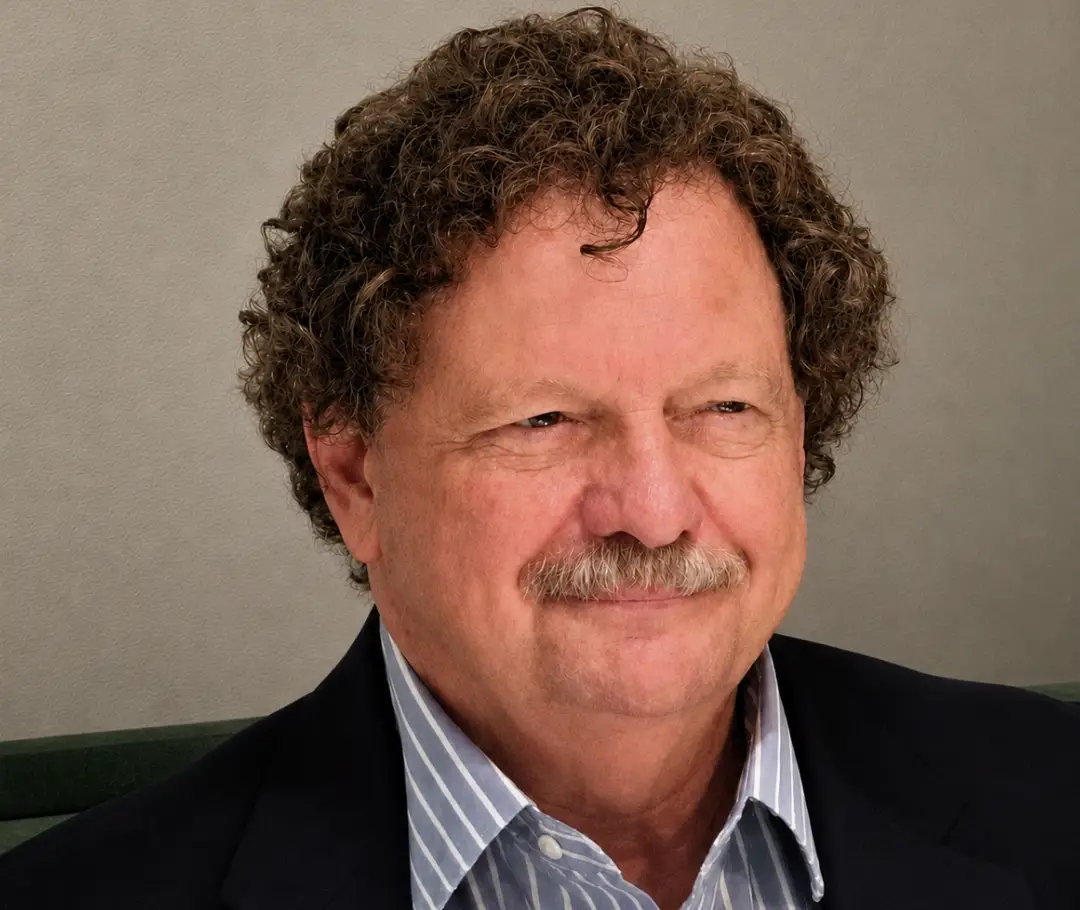
Dr. Gosse’s expertise encompasses numerical analysis, finite element modeling, structural failure analysis, composite materials, polymer systems, and advanced engineering methods development. His technical work has focused extensively on the mechanics of composite materials, nonlinear structural behavior, nonlinear contact mechanics, structural stability, and snap-through phenomena—areas that are directly relevant to the development of CTC’s StrainVector Control™ technology.
In addition to his aerospace experience, Dr. Gosse has conducted research and development in materials science and engineering, including advanced composites, polymeric materials, and biologically inspired composite systems. His work integrates analytical modeling, computational simulation, and engineering design methodologies to solve complex structural and materials challenges across demanding applications.
Dr. Gosse holds a Ph.D. from the University of Washington, a Master of Science degree from Washington State University, and a Bachelor of Science degree from the University of California, Berkeley. He is a licensed Professional Engineer (Mechanical Engineering) in the State of Washington. Dr. Gosse is an inventor or co-inventor on more than 20 U.S. and international patents.
At CTC, Dr. Gosse provides technical leadership supporting the analysis, development, and optimization of next-generation StrainVector Control™ structures and their application across aerospace, defense, industrial, robotics, and transportation markets.
See What's Possible
CTC works directly with OEMs, part manufacturers, and development partners to evaluate how StrainVector Control™ can enhance product performance.
Leveraging proprietary analysis tools and extensive expertise in nonlinear structural behavior, we help customers identify promising design approaches, evaluate technology integration opportunities, and accelerate product development by reducing reliance on costly iterative design, fabrication, and testing.
Our role is to provide technical insight and design support that enables more efficient development, while customers retain responsibility for their final product designs.